Search results
 374-901C
BR Mk1 POS Post Office Sorting Van Post Office Red
 'N' Gauge
 Released: 04/06/26
 Era 5
Era 5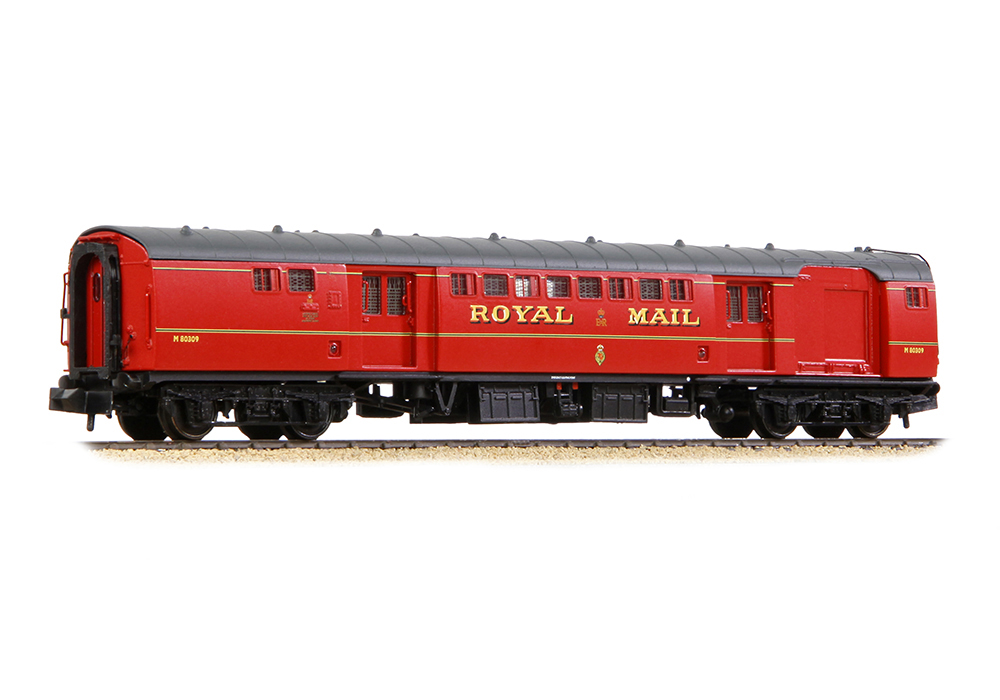
Our Price:
£47.65
£47.65
374-902BBR Mk1 POS Post Office Sorting Van BR Blue & Grey (Royal Mail)
'N' GaugeReleased: 04/06/26Era 7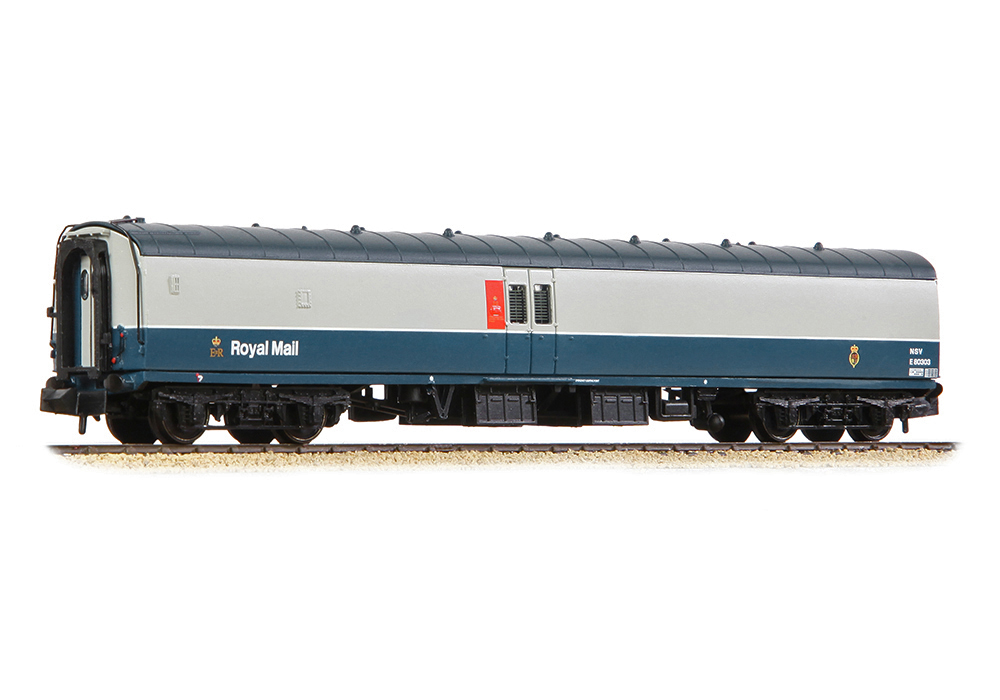
Our Price:
£47.65
£47.65
374-903ABR Mk1 POS Post Office Sorting Van Royal Mail Letters Red
'N' GaugeReleased: 04/06/26Era 8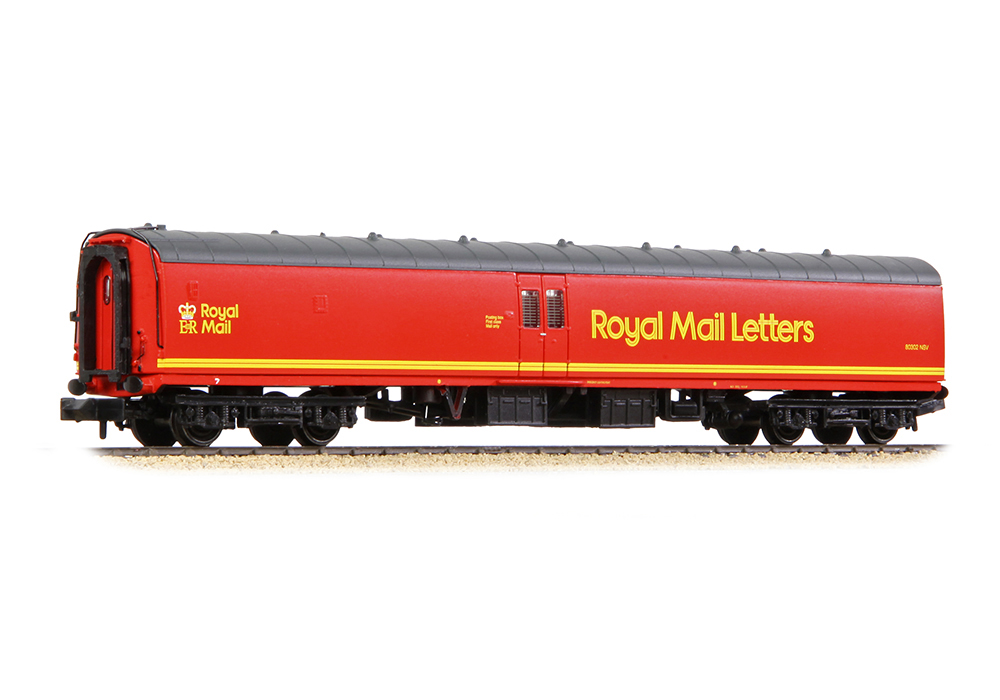
Our Price:
£47.65
£47.65
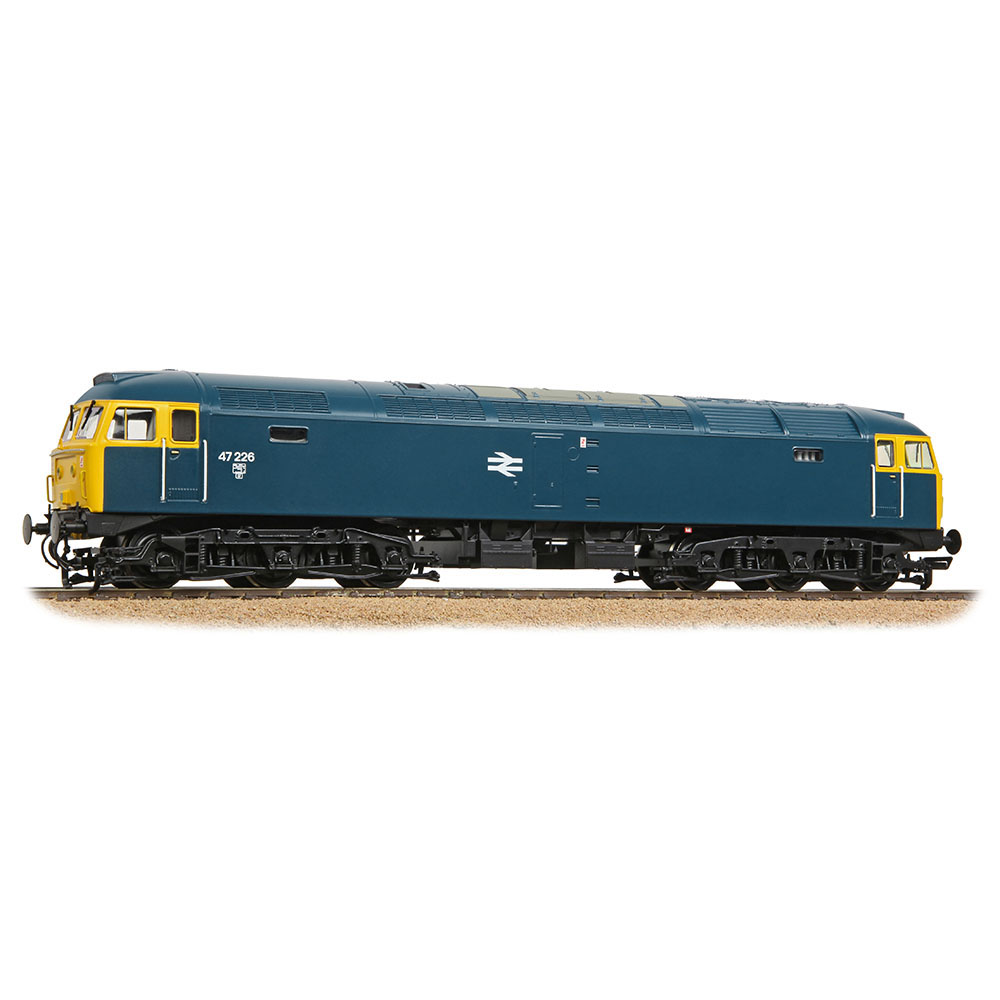
 35-411A
Class 47/0 47226 BR Blue
'OO' GaugeReleased: 04/06/26 DCC Ready (PluX22)Era 8
Towards the end of the 1950s, British Railways began planning a new fleet of diesel locomotives and after investigating several prototypes, BR decided to place an order with Brush Engineering for 20 locomotives during February 1961. The resulting design became the iconic Brush Type 4 Diesel locomotive, a practical, versatile design with a very distinctive cab. Powered with a Sulzer engine and initially rated at 2,750hp, the locomotive could achieve a top speed of 75mph with a tractive effort of 55,000lb. Building commenced in January 1962 and the first locomotive No. D1500 appeared in late September of the same year with test runs on the London Midland Region and Western Region. The design was a success and BR went on to order a total of 512 with continuous production through to early 1967, forming the largest single class of main-line diesel locomotives in the UK.
Our Price:
£203.95
£203.95
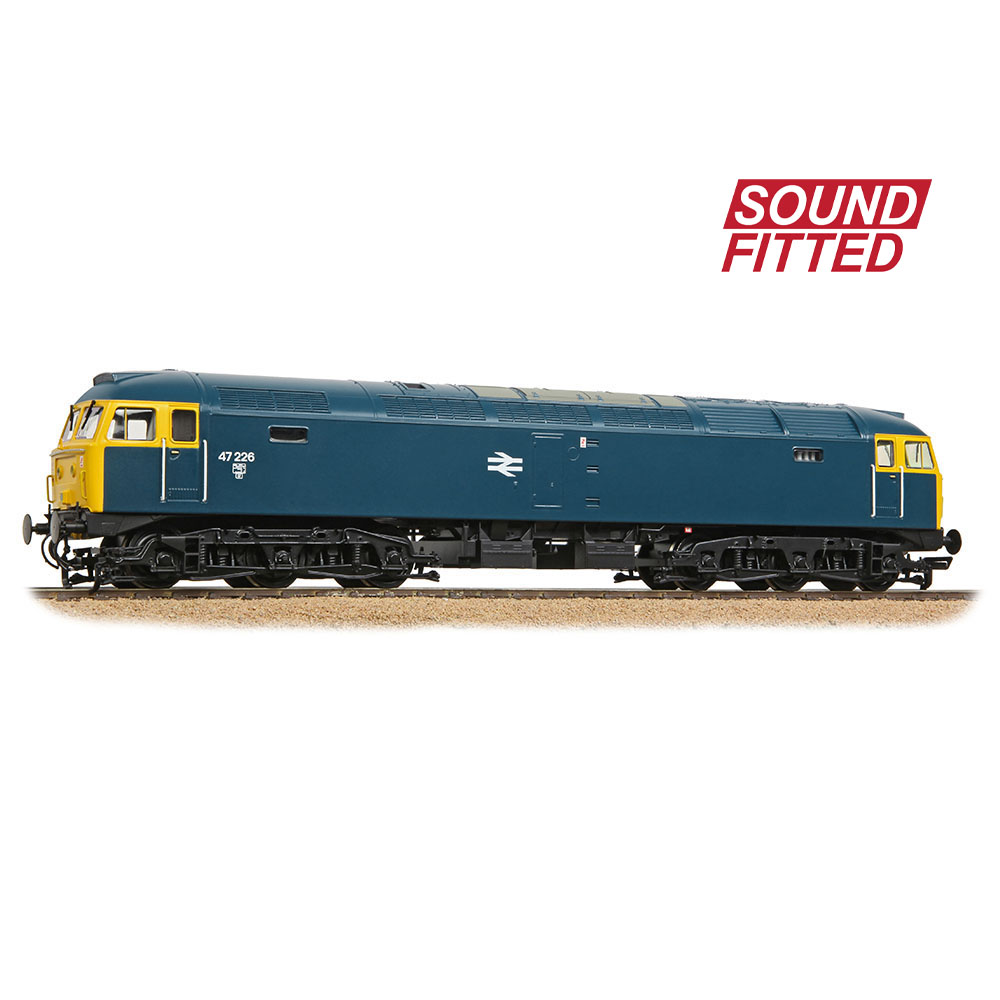
35-411ASFClass 47/0 47226 BR Blue With DCC Sound
'OO' GaugeReleased: 04/06/26DCC FittedDCC SoundEra 8Towards the end of the 1950s, British Railways began planning a new fleet of diesel locomotives and after investigating several prototypes, BR decided to place an order with Brush Engineering for 20 locomotives during February 1961. The resulting design became the iconic Brush Type 4 Diesel locomotive, a practical, versatile design with a very distinctive cab. Powered with a Sulzer engine and initially rated at 2,750hp, the locomotive could achieve a top speed of 75mph with a tractive effort of 55,000lb. Building commenced in January 1962 and the first locomotive No. D1500 appeared in late September of the same year with test runs on the London Midland Region and Western Region. The design was a success and BR went on to order a total of 512 with continuous production through to early 1967, forming the largest single class of main-line diesel locomotives in the UK.
Our Price:
£301.70
£301.70
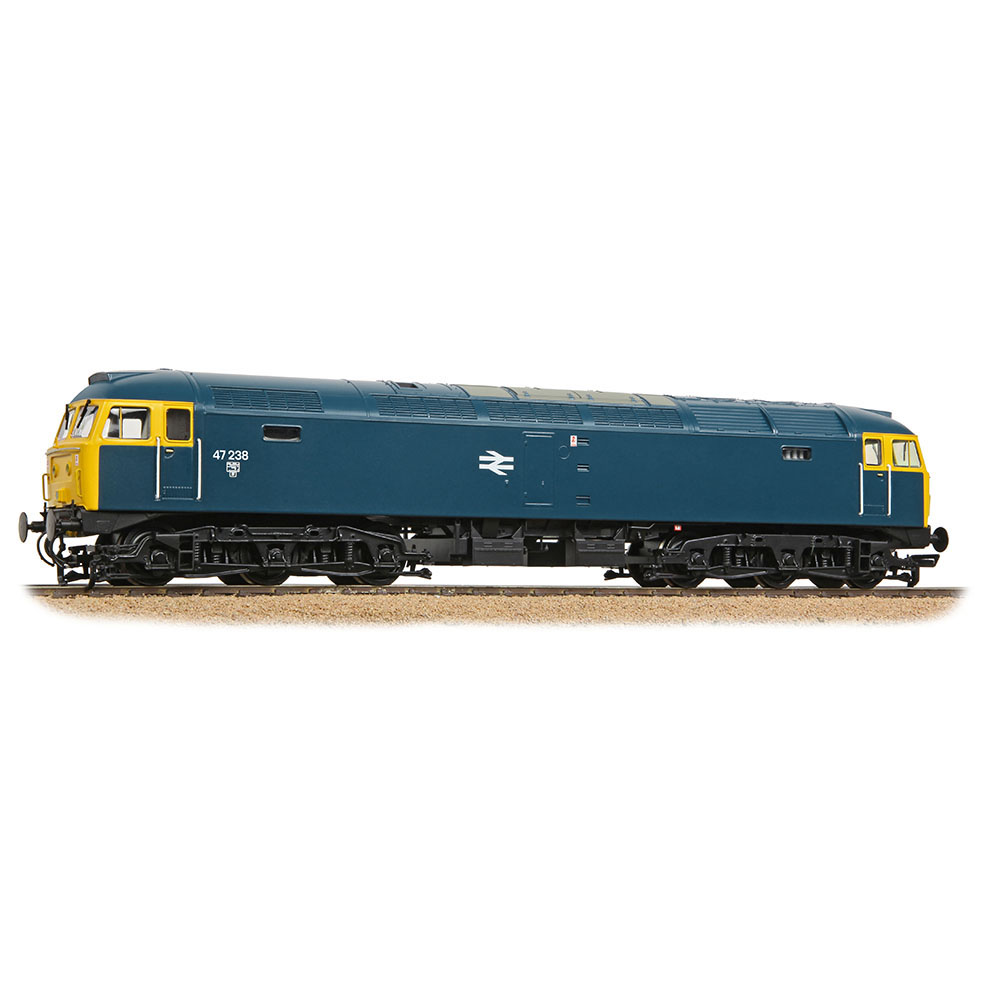
35-411BClass 47/0 47238 BR Blue
'OO' GaugeReleased: 04/06/26DCC Ready (PluX22)Era 8Towards the end of the 1950s, British Railways began planning a new fleet of diesel locomotives and after investigating several prototypes, BR decided to place an order with Brush Engineering for 20 locomotives during February 1961. The resulting design became the iconic Brush Type 4 Diesel locomotive, a practical, versatile design with a very distinctive cab. Powered with a Sulzer engine and initially rated at 2,750hp, the locomotive could achieve a top speed of 75mph with a tractive effort of 55,000lb. Building commenced in January 1962 and the first locomotive No. D1500 appeared in late September of the same year with test runs on the London Midland Region and Western Region. The design was a success and BR went on to order a total of 512 with continuous production through to early 1967, forming the largest single class of main-line diesel locomotives in the UK.
Our Price:
£203.95
£203.95
 35-411BSF
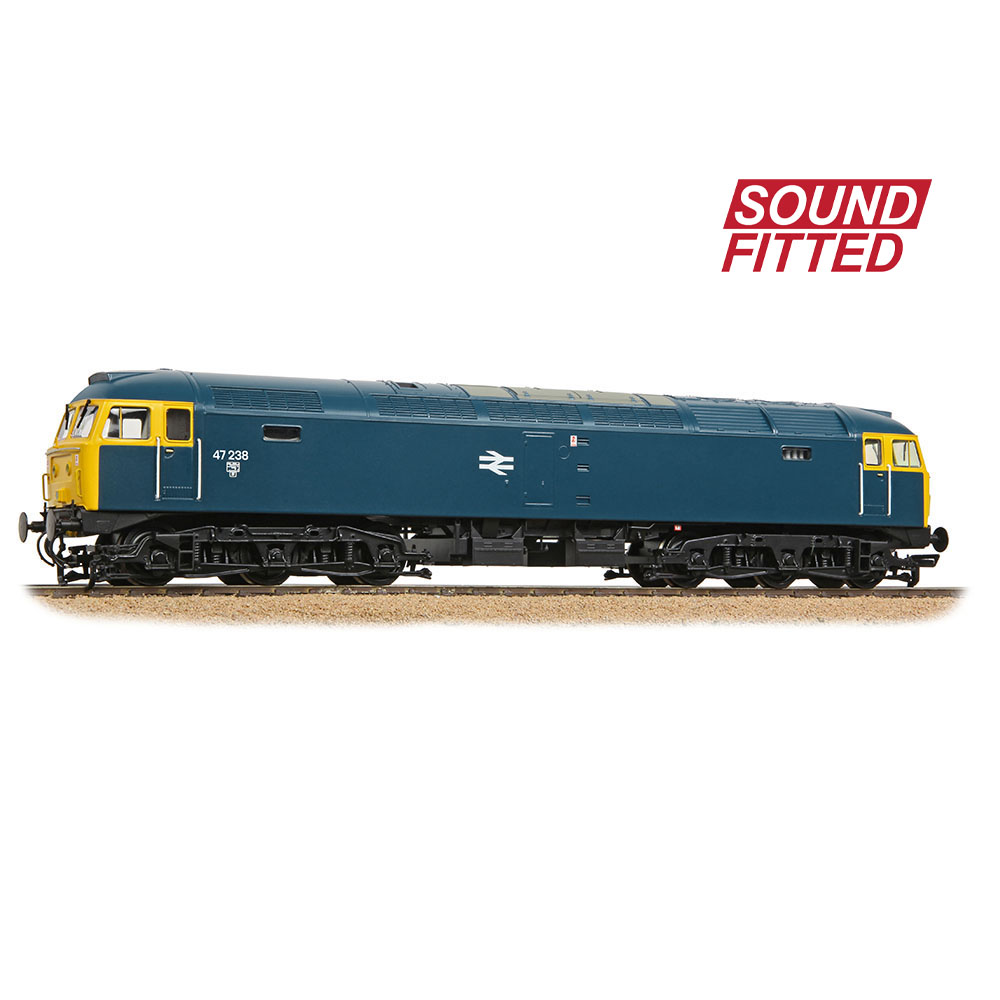
Class 47/0 47238 BR Blue With DCC Sound
'OO' GaugeReleased: 04/06/26DCC FittedDCC SoundEra 8Towards the end of the 1950s, British Railways began planning a new fleet of diesel locomotives and after investigating several prototypes, BR decided to place an order with Brush Engineering for 20 locomotives during February 1961. The resulting design became the iconic Brush Type 4 Diesel locomotive, a practical, versatile design with a very distinctive cab. Powered with a Sulzer engine and initially rated at 2,750hp, the locomotive could achieve a top speed of 75mph with a tractive effort of 55,000lb. Building commenced in January 1962 and the first locomotive No. D1500 appeared in late September of the same year with test runs on the London Midland Region and Western Region. The design was a success and BR went on to order a total of 512 with continuous production through to early 1967, forming the largest single class of main-line diesel locomotives in the UK.
Our Price:
£301.70
£301.70
 R30397
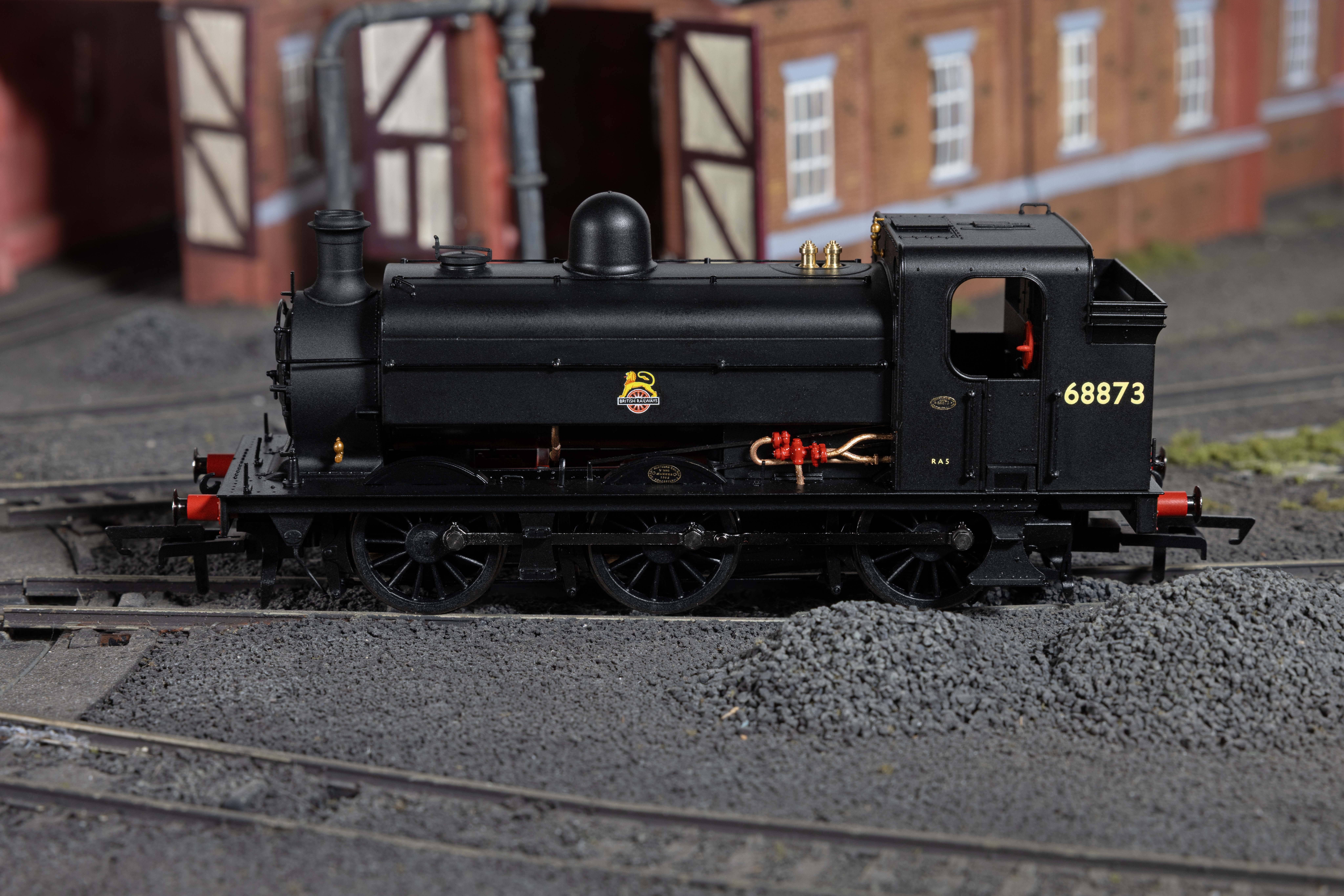
BR (Late) - Class J52 - '68846'
'OO' GaugeReleased: 18/06/26DCC Ready (21 Pin)Era 4This locomotive entered service as one of Henry Ivatt’s ‘J13’ Class as No. 1247, having been built under contract by Sharp, Stewart in 1899. It became LNER ‘J52’ 4247 at the Grouping in 1923, and later 8846 under the LNER’s 1946 renumbering scheme.
It entered BR service as 68846 and was withdrawn from King’s Cross ‘Top Shed’ in May 1959, at which point it became the first preserved locomotive to be bought directly from BR when it was acquired by Captain W.G. Smith. It is now part of the National Collection and restored as GNR 1247.
Our Price:
£157.49
£157.49
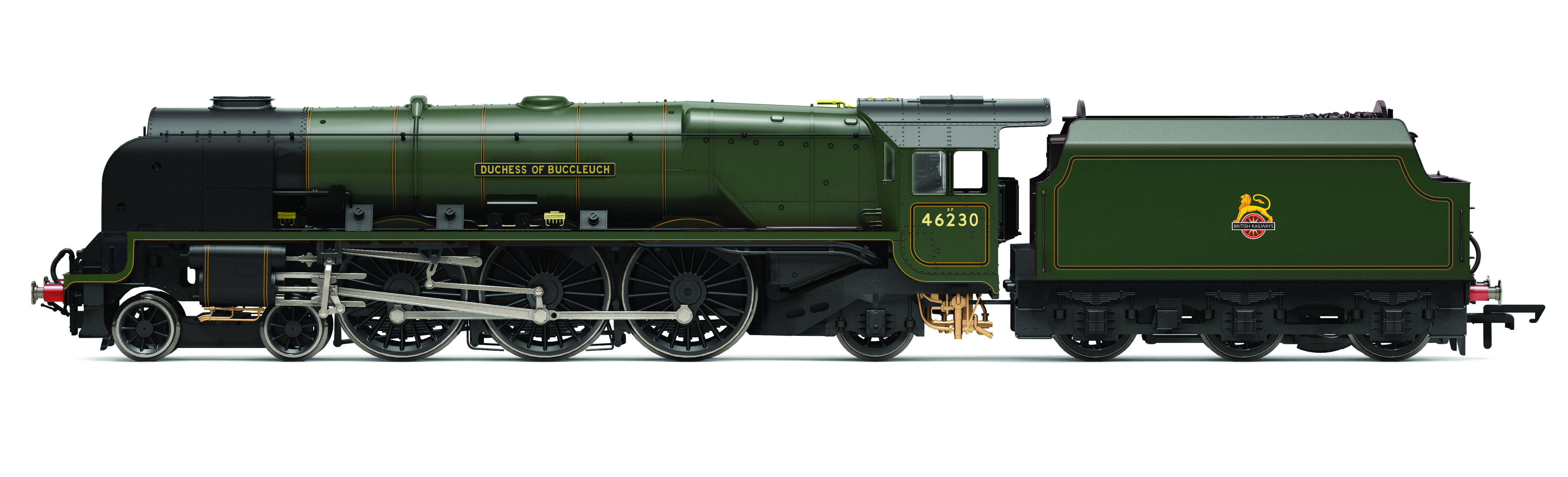
R30400Hornby Dublo: BR (Early) - Princess Coronation - 46230 'Duchess of Buccleuch'
'OO' GaugeReleased: 18/06/26DCC Ready (21 Pin)Era 4Also known as the ‘Duchess’ Class, Stanier’s ‘Princess Coronations’ were among the biggest and most powerful express passenger locomotives in Britain.
Thirty-five were built at Crewe Works between 1937 and 1948, many having streamlined casing. Ten were set aside for hauling the prestigious ‘Coronation Scot’ between London Euston and Glasgow. No. 46230 wasn’t one of those, but it was the first of the third batch of locomotives, which consisted of five non-streamlined versions, and went new to Camden in June 1938 as LMS No. 6230.
At Nationalisation in 1948, the locomotive became BR No. 46230 and was painted in lined Brunswick green as depicted by the model. At the time, the locomotive was based at Polmadie shed in Glasgow, from where it was withdrawn in December 1963.
Our Price:
£314.99
£314.99
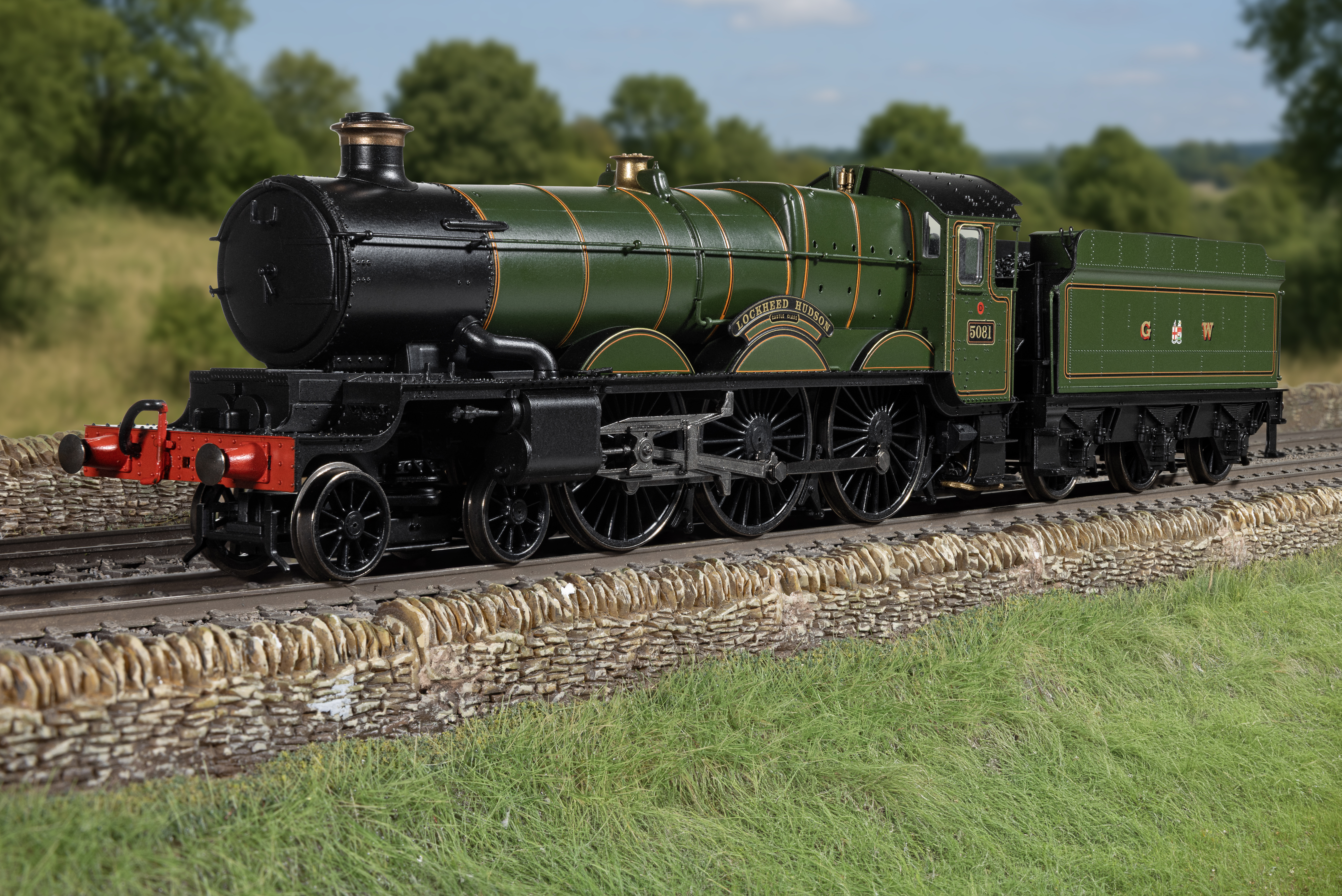
R30402GWR - Castle Class - 5081 'Lockheed Hudson' Era 3 - Grouping (1923 - 1947)
'OO' GaugeReleased: 08/07/26DCC Ready (21 Pin)Era 3Designed as front-line express passenger locomotives, the GWR ‘4073’ Class ‘Castles’ were built over a long period. The first of 155 new locomotives entered traffic in August 1923, while the last was finished at Swindon in August 1950 under British Railways. Sixteen further locomotives – 15 ‘Stars’ and one-off ‘Pacific’ No. 111 Great Bear – were also rebuilt as ‘Castles’, making 171 in total. No. 5081 was built in 1939 and originally named ‘Penrice Castle’ but was renamed ‘Lockheed Hudson’ in 1941. It was withdrawn from Cardiff East Dock in October 1963.
Our Price:
£206.99
£206.99
 986002
Kerr Stuart Sirdar ‘Leonora’ – Lined Green
'OO-9' GaugeReleased: 13/07/26DCC Ready (6 Pin)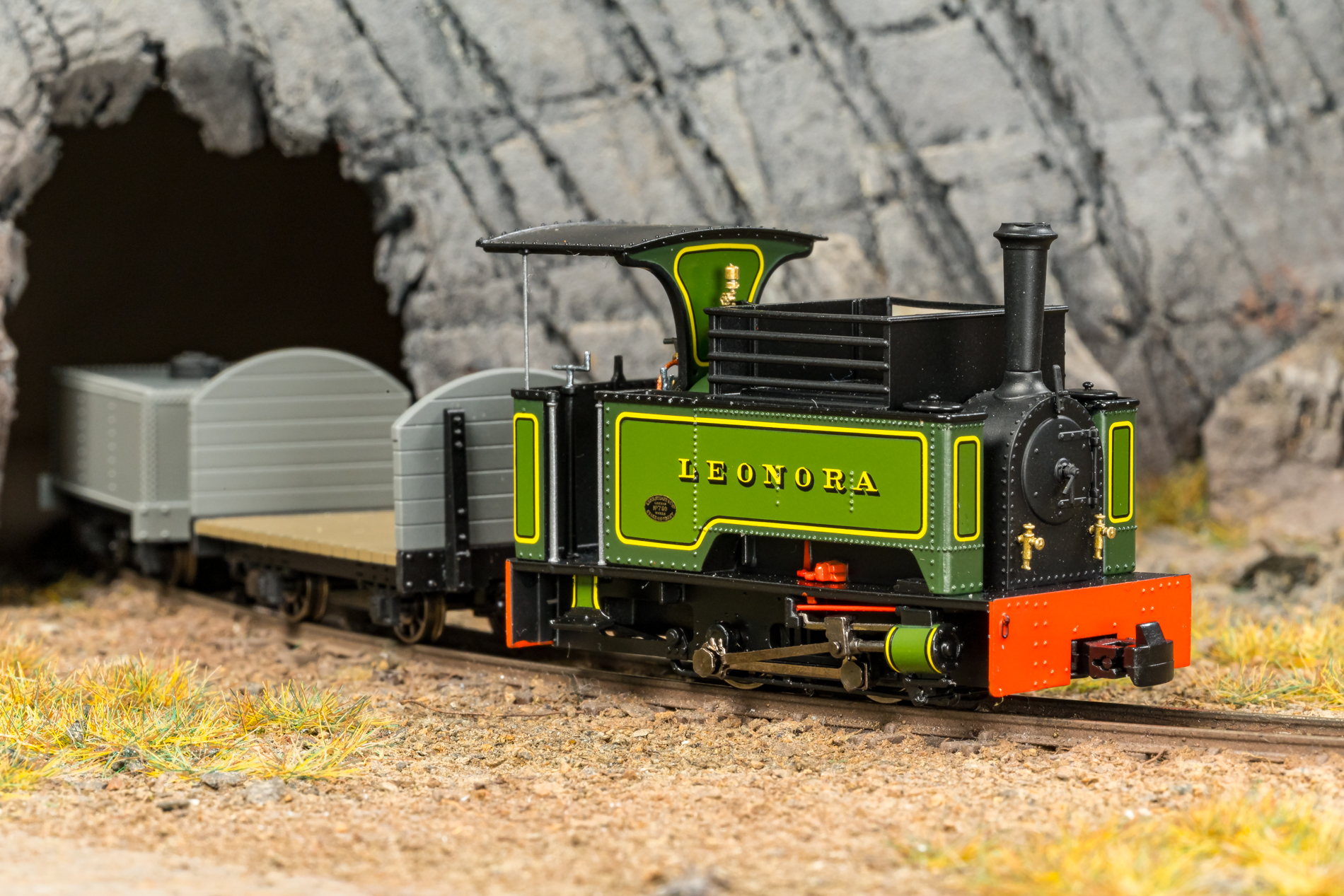
Our Price:
£118.95
£118.95
986003Kerr Stuart Sirdar – Lined Black
'OO-9' GaugeReleased: 13/07/26DCC Ready (6 Pin)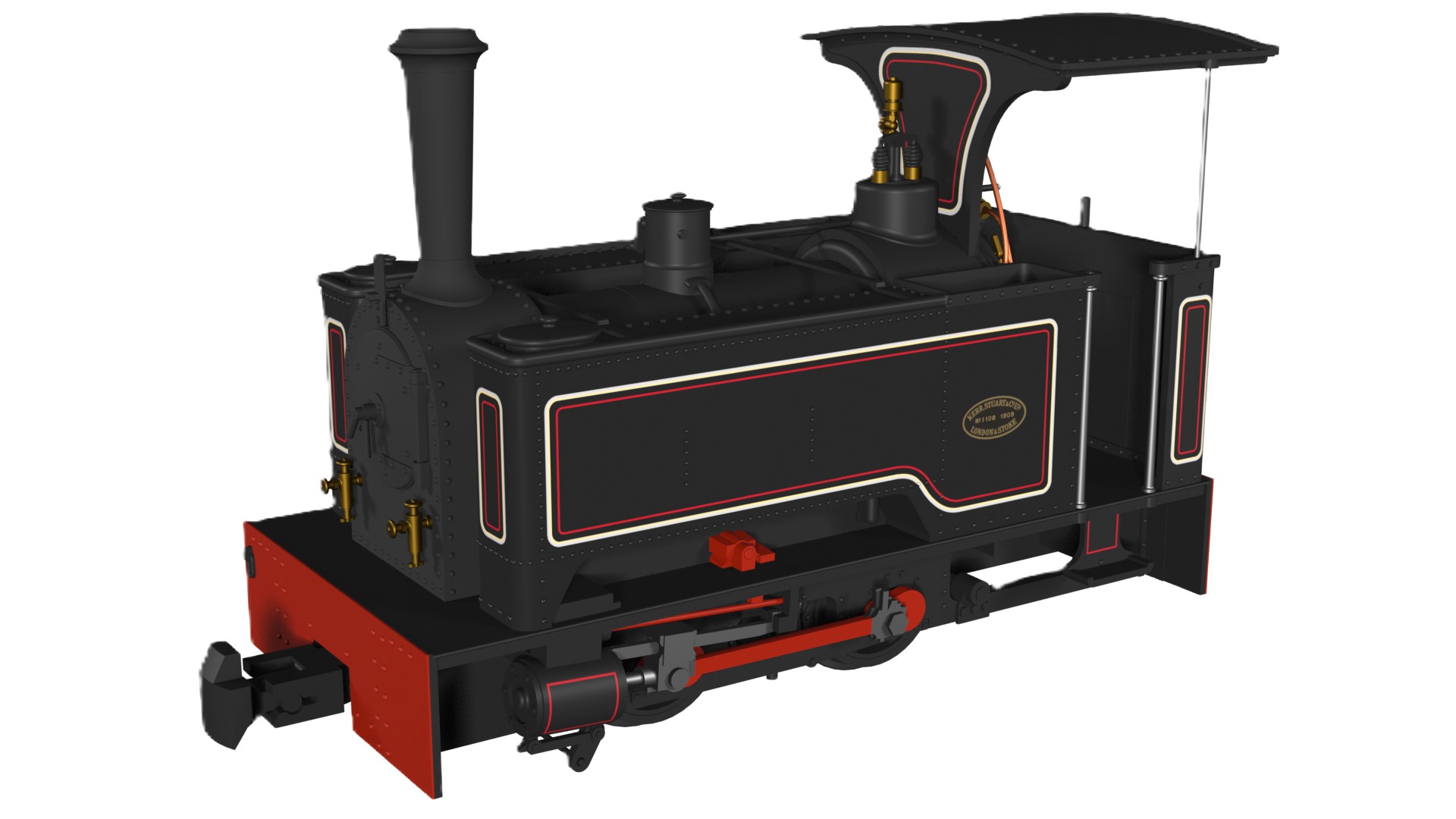
Our Price:
£118.95
£118.95
986005Kerr Stuart Sirdar – Lined Burnt Orange
'OO-9' GaugeReleased: 13/07/26DCC Ready (6 Pin)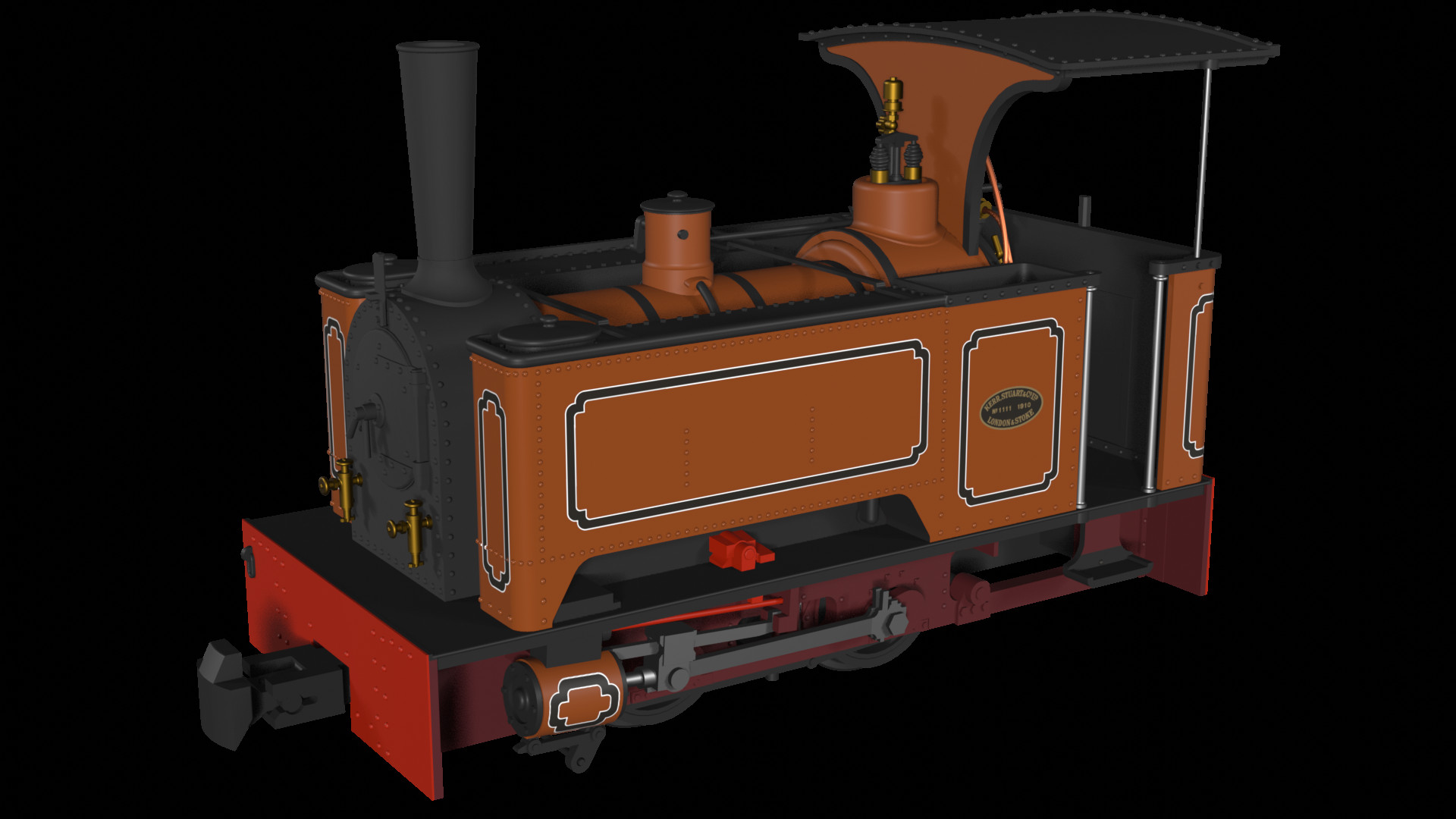
Our Price:
£118.95
£118.95
986006Kerr Stuart Sirdar – Lined Maroon
'OO-9' GaugeReleased: 13/07/26DCC Ready (6 Pin)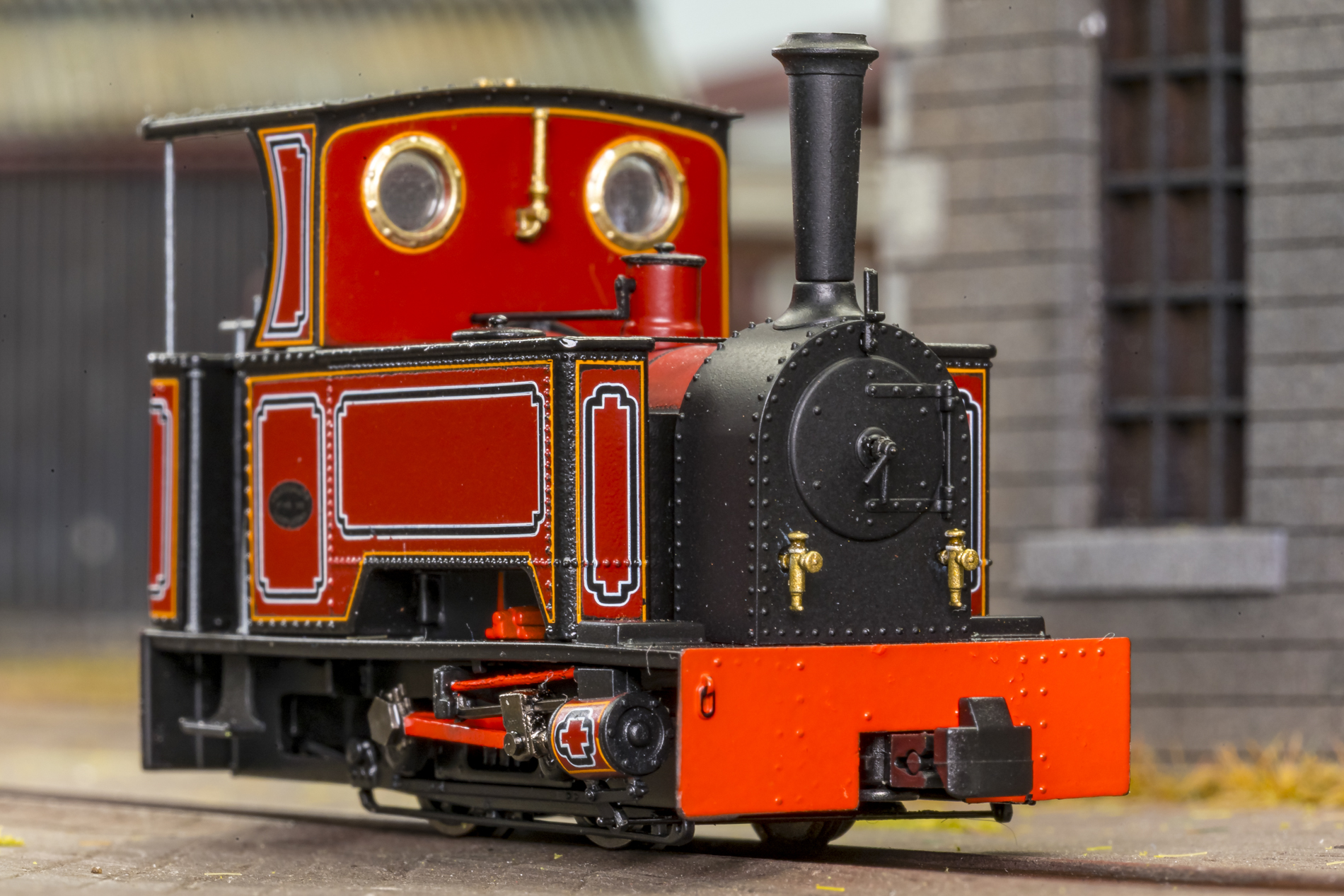
Our Price:
£118.95
£118.95
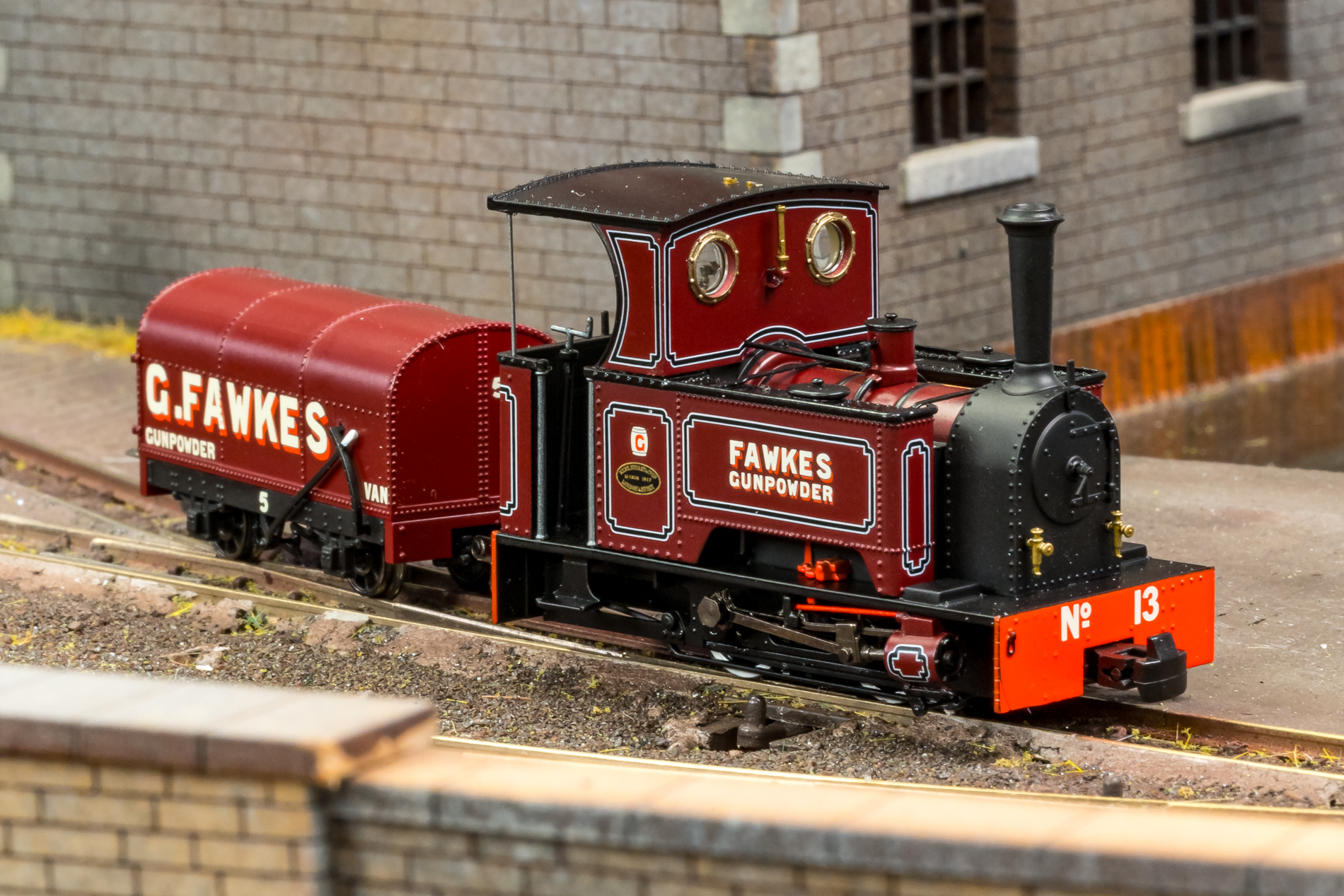
986206Kerr Stuart ‘What If’ Short Tank Sirdar – G. Fawkes Lined Maroon
'OO-9' GaugeReleased: 13/07/26DCC Ready (6 Pin)Wagon not included.
Our Price:
£118.95
£118.95
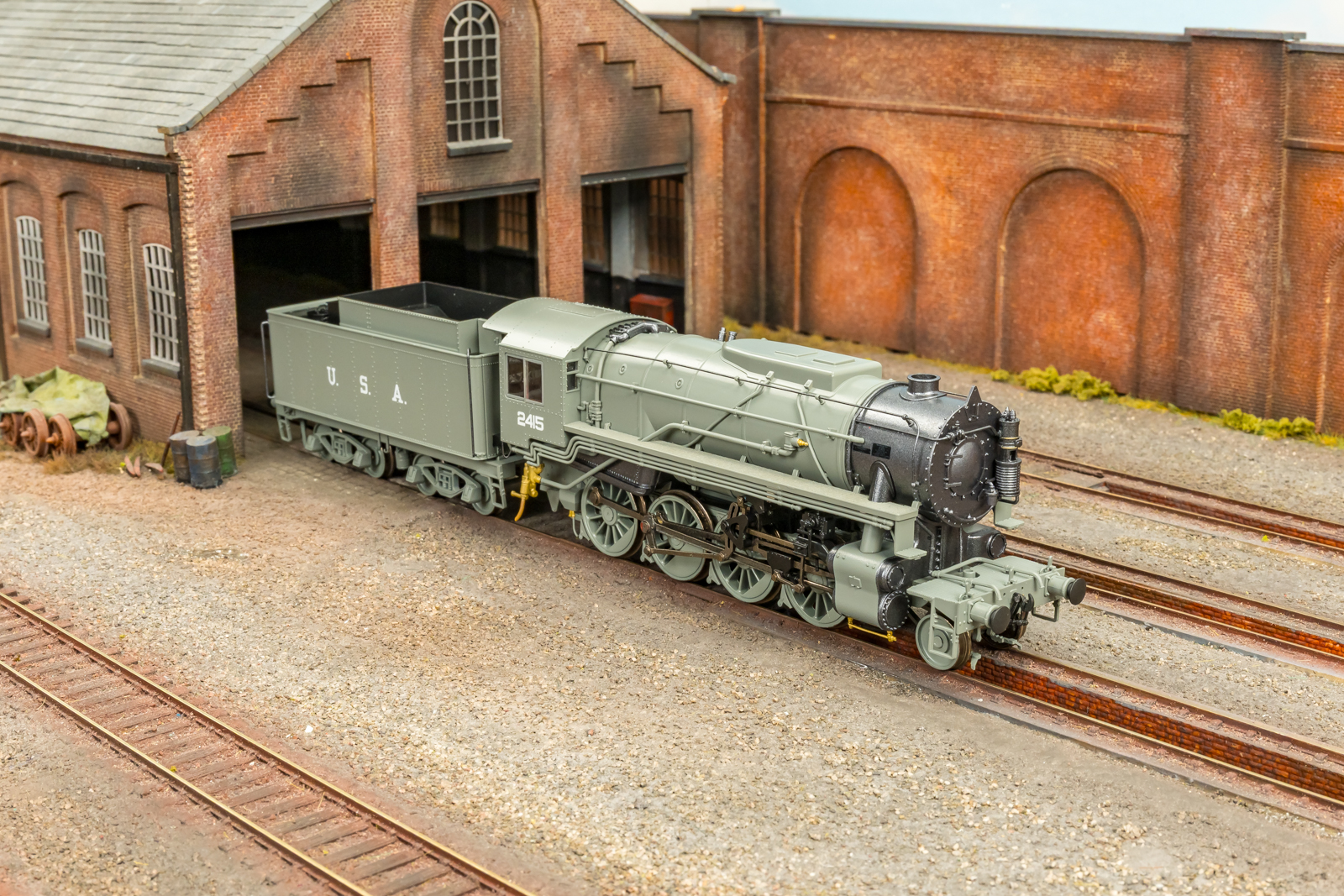
926002USATC S160 No.2415
'OO' GaugeReleased: 22/07/26DCC Ready (21 Pin)Era 3The London, Midland and Scottish Railway took delivery of a total of 50 locomotives. The engines were concentrated on a small number of sheds including Shrewsbury (4A), Crewe South (5B), Mold Junction (6B) and Toton (18A). As a result, they saw restricted usage on parts of the LMS network, mostly working on the Southern sections.
No.2415 was a standard American Locomotive Company (ALCO) engine and has been depicted in wartime condition. It was subsequently sent to Germany and worked from the Koblenz-Lutzel shed, before finally moving to Hungary with MAV and becoming 411.290.
Our Price:
£229.45
£229.45
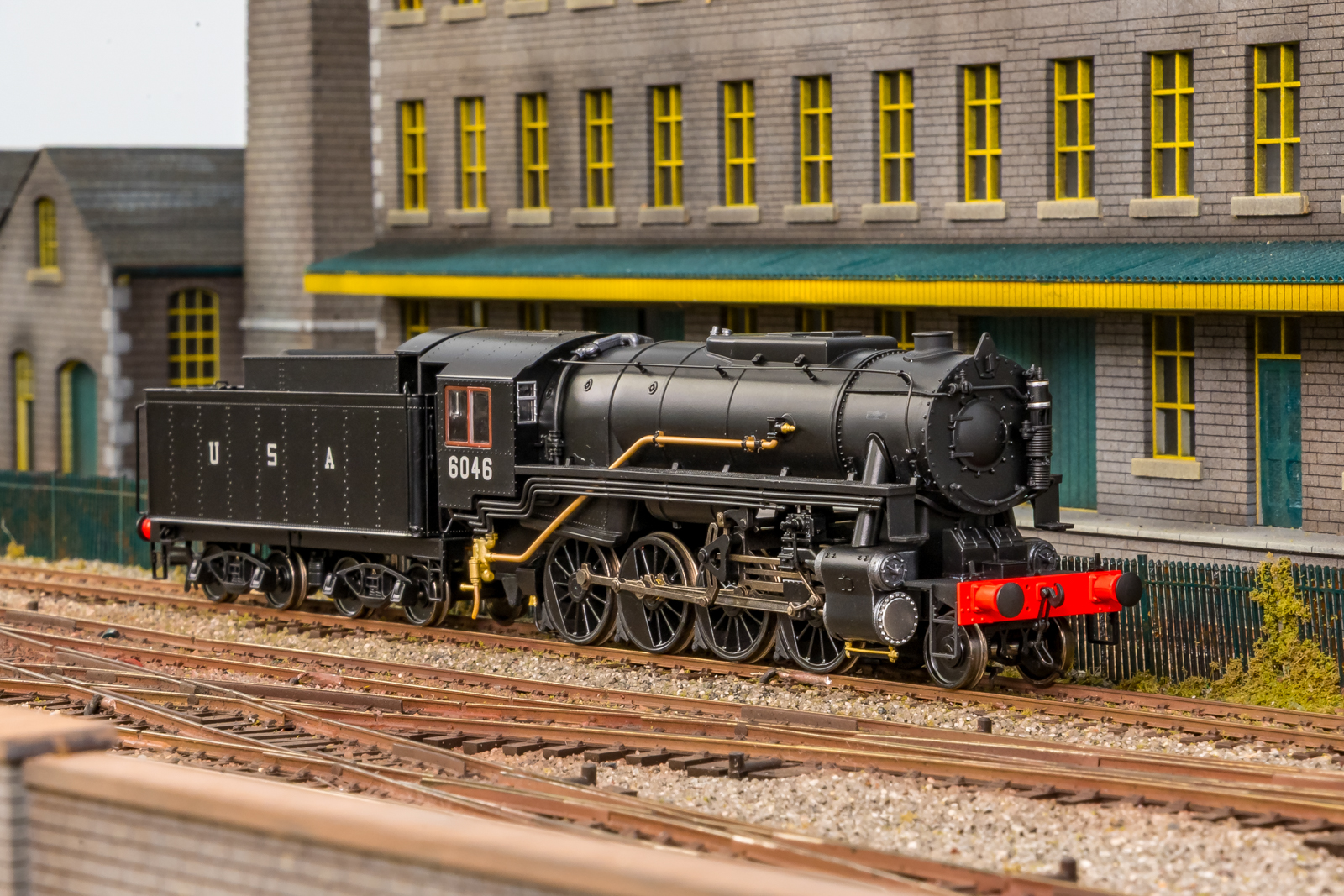
926507USATC S160 No.6046 (as preserved) With DCC Sound Fitted
'OO' GaugeReleased: 22/07/26DCC FittedDCC SoundEra 11Built as one of the last S160 locomotives, No.6046 was sent directly to France towards the end of the War. When its use with the SNCF came to an end, the engine found its way to Hungary where it became MAV 411.144 with the Hungarian State Railways. It spent most of its time in Hungary working on industrial lines before being withdrawn for preservation in the Hungarian National Collection. However, an error meant the loco was sent for scrap. Fortunately, it was saved and moved to the UK, steaming for the first time in 2012. Since then, 6046 has been a regular performer at various heritage railways and has recently undergone an overhaul at the CVR once again, returning to traffic in October 2023.
Our Price:
£322.95
£322.95
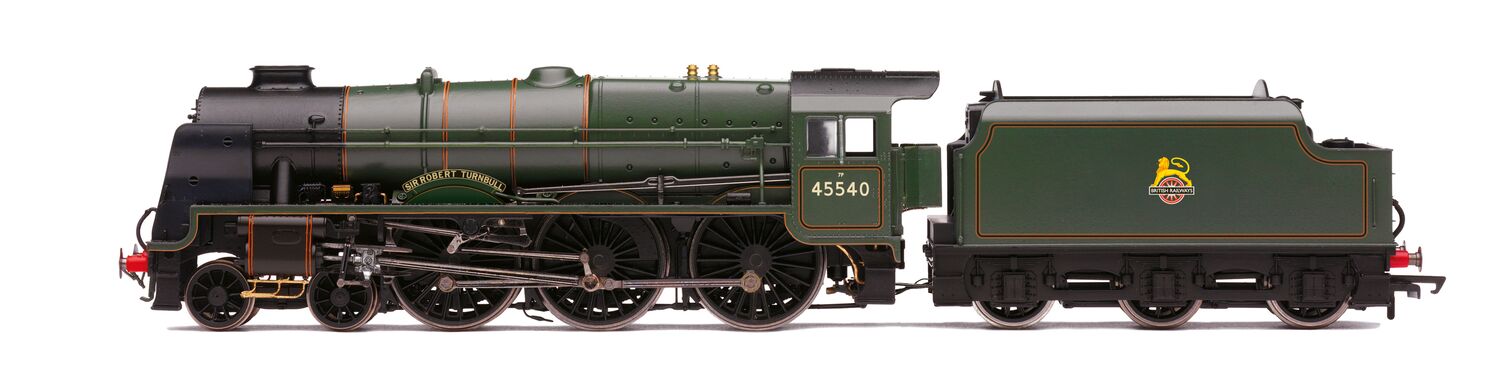
R30415BR (Early) - Patriot Class - 'Sir Robert Turnbull' 45540
'OO' GaugeReleased: 22/07/26DCC Ready (21 Pin)Era 4This locomotive started out as 5901 when it emerged from Crewe Works in August 1933, but was later renumbered to 5540. It was rebuilt with a Stanier taper boiler in October 1947, which promoted it from power class ‘6P’ to ‘7P’. It became 45540 under BR in May 1948 and survived in service until condemned in April 1963 and was scrapped by July that year.
The locomotive’s name, transferred from withdrawn ‘Large Claughton’ 1161, was in honour of Sir Robert Turnbull, former General Manager of the LNWR, who was knighted in 1913.
Our Price:
£215.99
£215.99
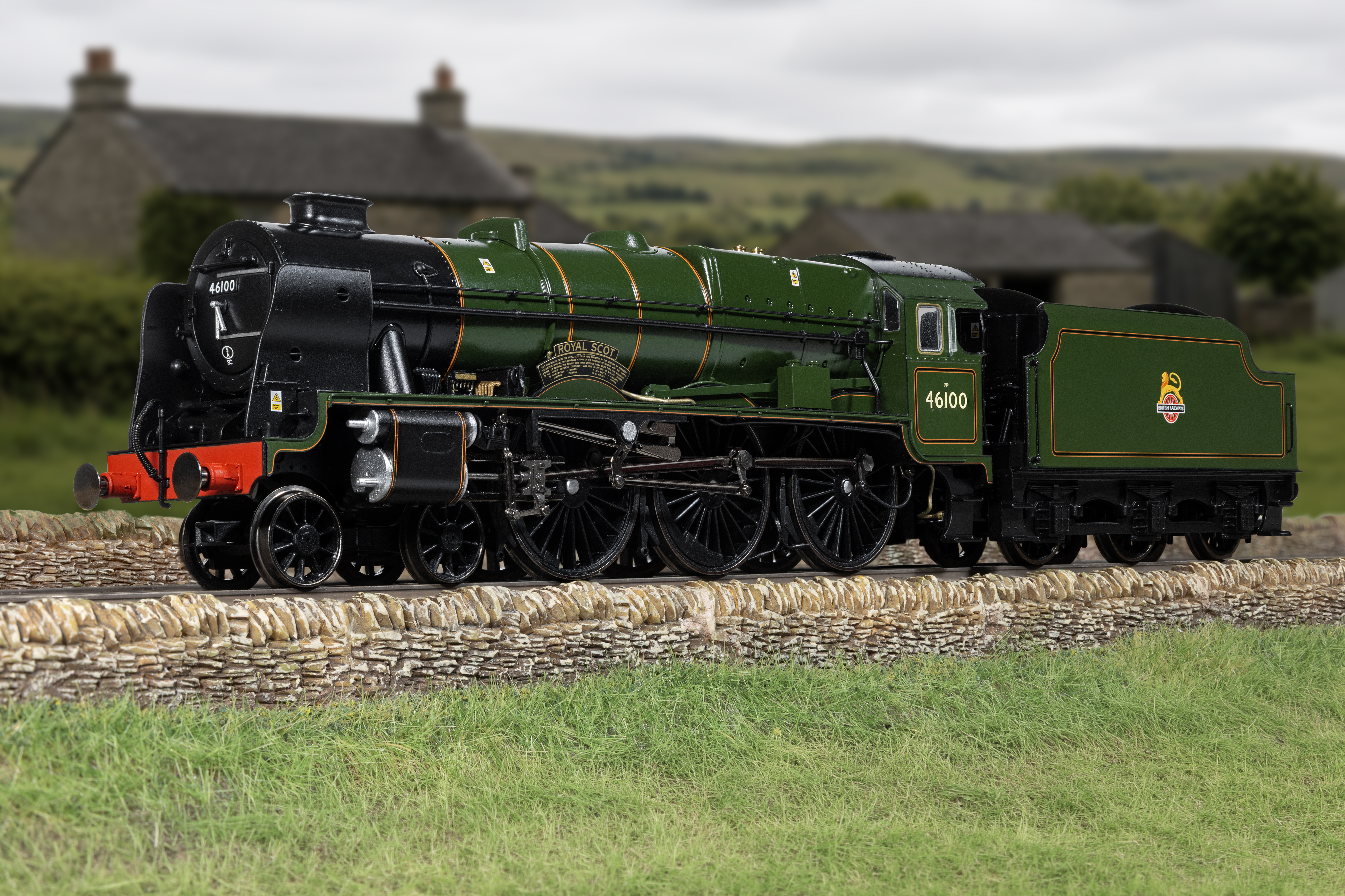
R30500BR - Royal Scot Class - 'Royal Scot' - 46100 (The One:One Collection)
'OO' GaugeReleased: 22/07/26DCC Ready (21 Pin)Era 11First of the class, 6100 ‘Royal Scot’ entered service with the LMS in 1927. Designed by Henry Fowler as a three-cylinder express locomotive with parallel boiler, a lack of capacity at its locomotive works meant construction of the first 50 was awarded to the North British Locomotive Co. in Glasgow. The remaining 20 were built at Derby Works.
No. 6100 swapped identities with the much newer 6152 ‘King’s Dragoon Guardsman’ (built in 1930) in order to attend the ‘Century of Progress Exhibition’, Chicago, in 1933. As BR 46100, ‘Royal Scot’ was rebuilt with a taper boiler to its present condition in 1950. Withdrawn in 1962, it returned to the main line in 2016, but is currently stored at the One:One Collection, Margate.
Our Price:
£215.99
£215.99
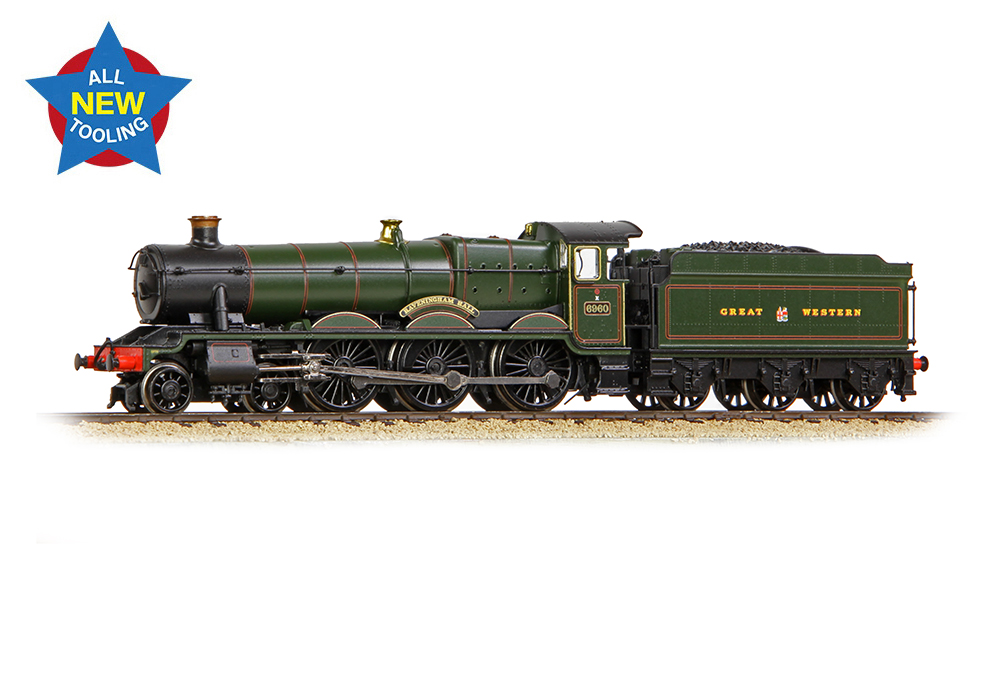
372-450GWR 'Modified Hall' 6960 'Raveningham Hall' GWR Lined Green (GW Crest)
'N' GaugeReleased: 22/07/26DCC Ready (Next18)Era 3The Great Western Railway (GWR) was famous for its variety of 4-6-0 steam locomotive classes, and none were more numerous and successful than the 49XX ‘Hall’ Class. The type was later developed to create the 6959 ‘Modified Hall’ Class which continued the successes of the ‘Halls’, operating from the final years of the GWR and throughout the British Railways period until steam ended on the Western Region in December 1965 yet N scale models of these iconic machines have never been produced, until now!
Developed alongside the brand new ‘Halls’ for the Graham Farish range, these masterpieces in miniature have been created through extensive research and detailed surveys of the preserved locomotives, of which there are several. The mixed traffic machines were found across the GWR network and beyond, and the new Graham Farish models will find many stablemates in the Bachmann range – from other locomotives to rolling stock and Scenecraft buildings – all suited to creating an authentic Western scene.
Our Price:
£161.45
£161.45